OJHW Logo without description by Miyuki Morikawa and Toma-Jin Morikawa-Fouquet
Chinami Oka
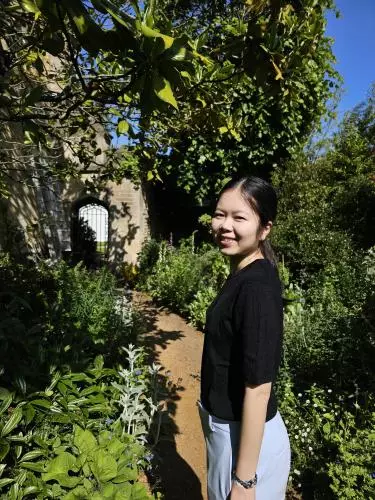
Assistant Professor
Nagoya University
oka.chinami.b8@f.mail.nagoya-u.ac.jpI am a historian and an Assistant Professor in the Graduate School of Humanities at Nagoya University. I specialise in transnational history, with a particular focus on the cultural, intellectual, and religious lives of people in modern Japan and the wider world.
My current book project reexamines the birth of modern Japan and its aftermath (1860s–1920s) through the experiences of samurai from northern Japan who lost in the Boshin Civil War (1868–69). By centring these figures, my research uncovers a previously overlooked cultural and intellectual phenomenon that underpinned an unexpected range of social reforms, including Japan’s first modern environmental movement, radical agrarian practices, the reimagining of the Christian God as a multi-gendered figure, and pioneering educational initiatives for women and for blind and deaf children. Collaborations between defeated samurai and transnational allies from Russia, Britain, the United States, Korea, and elsewhere in Japan fostered a competing vision of universal human progress, which rejected Western modernity, Eastern exoticism, and nativism. Instead, they embraced equality, interconnectedness, and the indivisibility of all beings and challenged state-sanctioned hierarchies of race, class, and gender. My work shows how this philosophy developed as a counter-narrative to Japan’s rising imperialism, particularly during and after the Russo-Japanese War.
This project exemplifies how transnational methodologies can reveal socially influential ideas and movements that dominant historical narratives often overlook. My study shows that the Meiji Restoration should not be seen solely as the beginning of Japan’s pursuit of Western modernity, but also as the start of a moral and intellectual counterculture committed to a more inclusive and nonhierarchical future, or what I call “symbiotic modernity”. While the discourse of Western modernity has underpinned many important historical findings, it has also constrained the ways historians imagine alternative pasts. In my research and teaching, I encourage students and scholars to critically reassess dominant modes of modern history writing – its narratives, methods, and sources which have long been shaped by the nation-state and the assumptions of Western modernity.
Before joining Nagoya, I taught at Oxford as the Tanaka Junior Research Fellow in Japanese Studies, where I also completed my DPhil in History and MSc in Modern Japanese Studies. My research has been published by The Historical Journal (Cambridge University Press), Amsterdam University Press, and Brill, among others, and I have been featured in the Historical Association’s podcast series.
Selected Publications:
Oka, Chinami. “Beyond Nation and Empire: A Transnational History of Christianity in Modern Japan.” Japanese Religions 47 (1&2), forthcoming.
Oka, Chinami. “From Father to Mother-Father: Reimagining God and Civilization in Modern Japan.” In Handbook of Christianity and Japanese Society, edited by Garrett Washington. Amsterdam University Press, forthcoming.
Oka, Chinami. “A Defeated Samurai of the Boshin Civil War and the Search for a New Universalism.” In Reopening the Opening of Japan: Transnational Approaches to Japan and the Wider World, edited by Lewis Bremner, Manimporok Dotulong, and Sho Konishi, 300–23. Brill, 2024.
Oka, Chinami. “Arai Ōsui and the Transnational Reimagination of Civilization in the Late Nineteenth-Century United States.” The Historical Journal 66 (2023): 101–121.
Goodman, Roger and Chinami Oka. “The Hensachi: Its Dominant Role in University Rankings.” In Handbook of Higher Education in Japan, edited by Paul Snowden, 133–142. Amsterdam University Press, 2021.
Goodman, Roger and Chinami Oka. “The Invention, Gaming, and Persistence of the Hensachi (‘Standardised Rank Score’) in Japanese Education.” Oxford Review of Education 44, no. 5 (2018): 581–98.